

Biogeochemical Argo
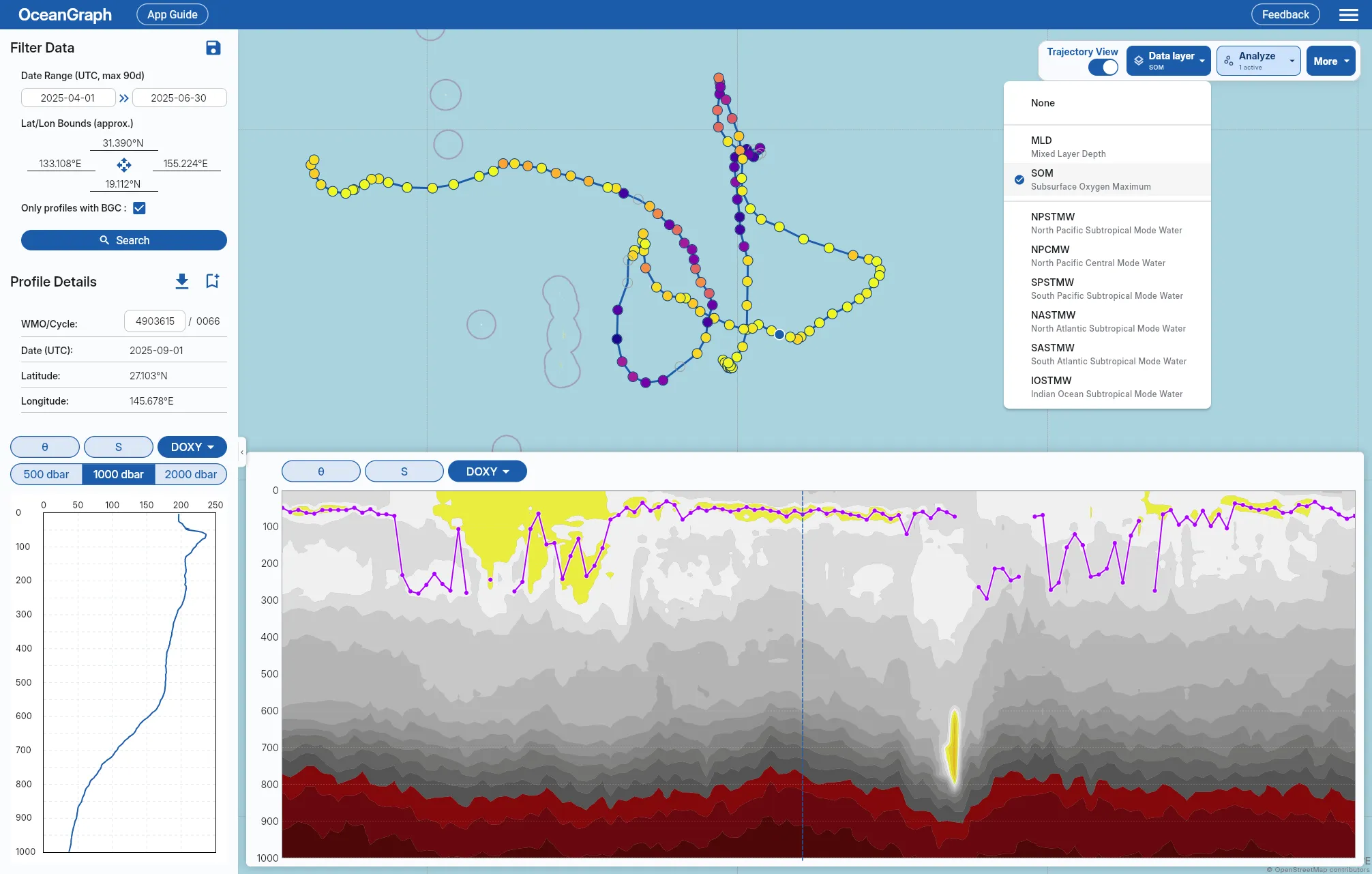
Where Is Oxygen Found in the Ocean? Why It Changes With Depth
Learn why dissolved oxygen is often high near the surface, lower at intermediate depths, and sometimes higher again in deep water—and how to read an oxygen profile.
Articles about
Read oxygen and other biogeochemical observations in their physical context.
Biogeochemical Argo
Learn why dissolved oxygen is often high near the surface, lower at intermediate depths, and sometimes higher again in deep water—and how to read an oxygen profile.
Biogeochemical Argo
Learn how to interpret dissolved oxygen profiles from BGC Argo, including ventilation, subsurface maxima, and links to physical structure.
Biogeochemical Argo
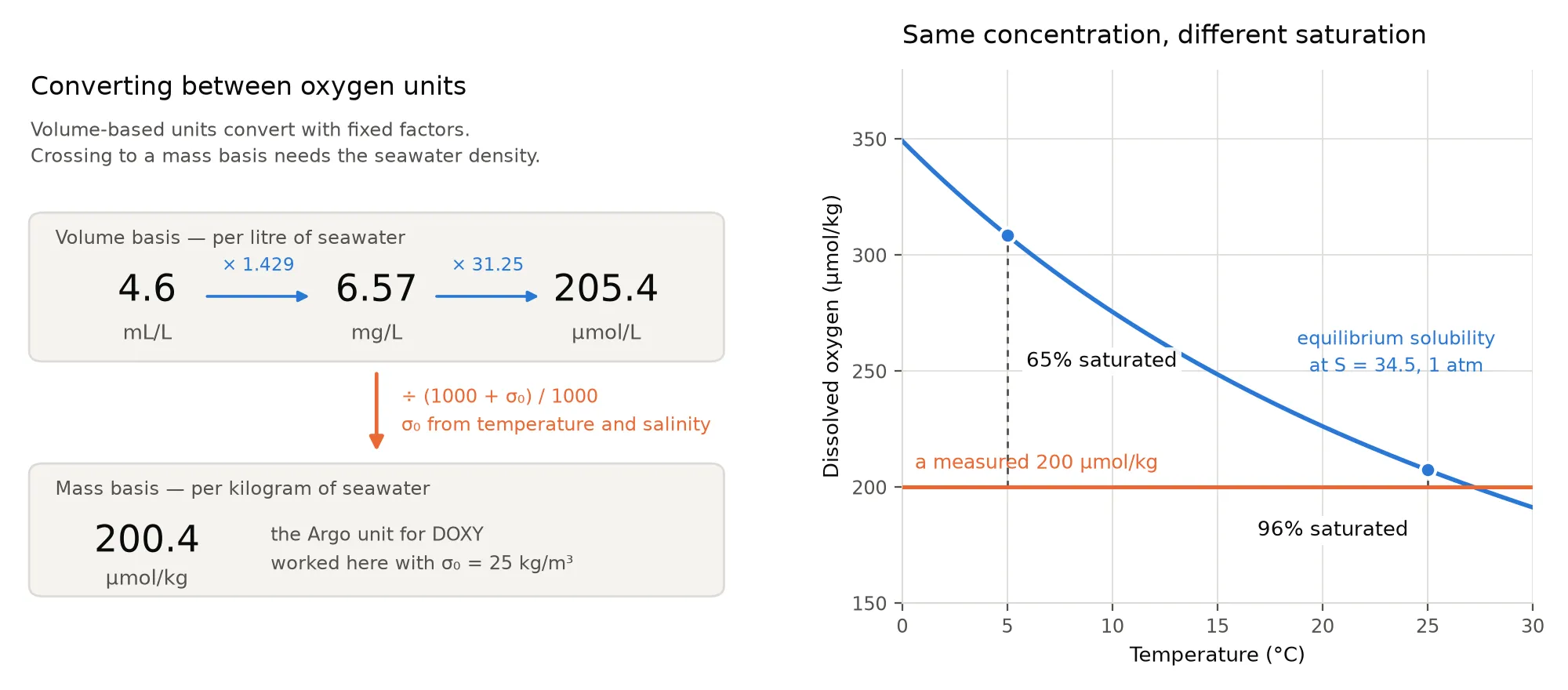
Convert between dissolved oxygen units correctly, understand why µmol/kg needs seawater density, and keep concentration separate from saturation.
Biogeochemical Argo
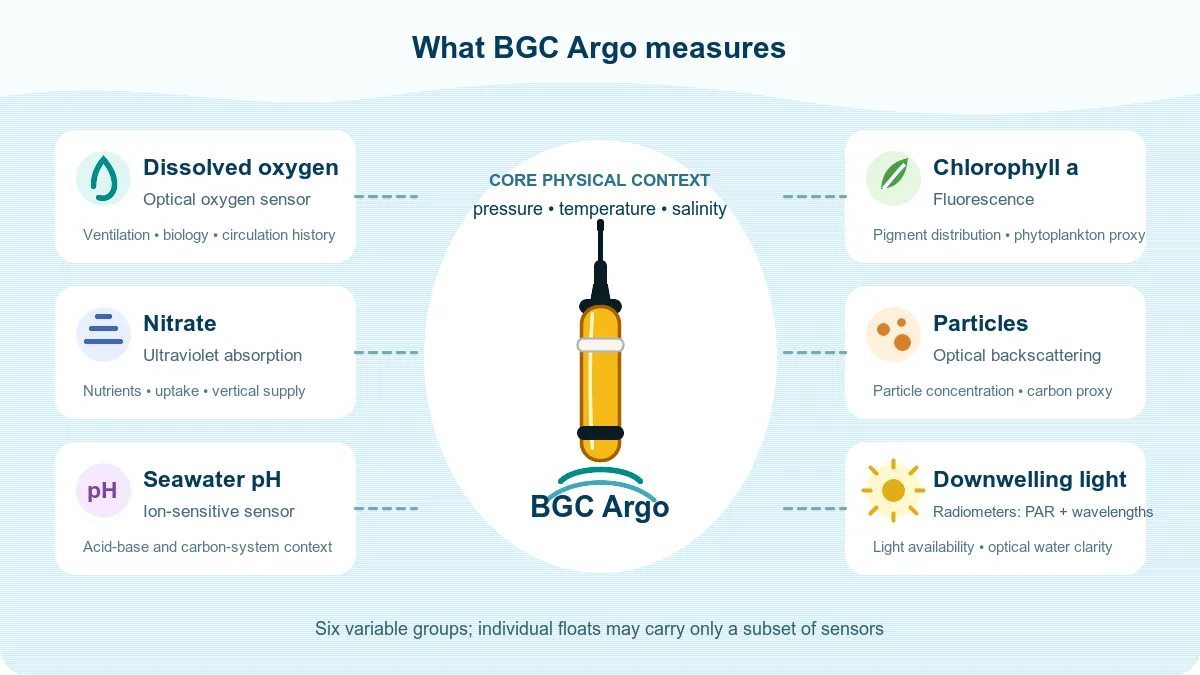
Learn what BGC Argo adds to Core Argo, how its six variable groups are measured, and what each profile can and cannot reveal.
Biogeochemical Argo
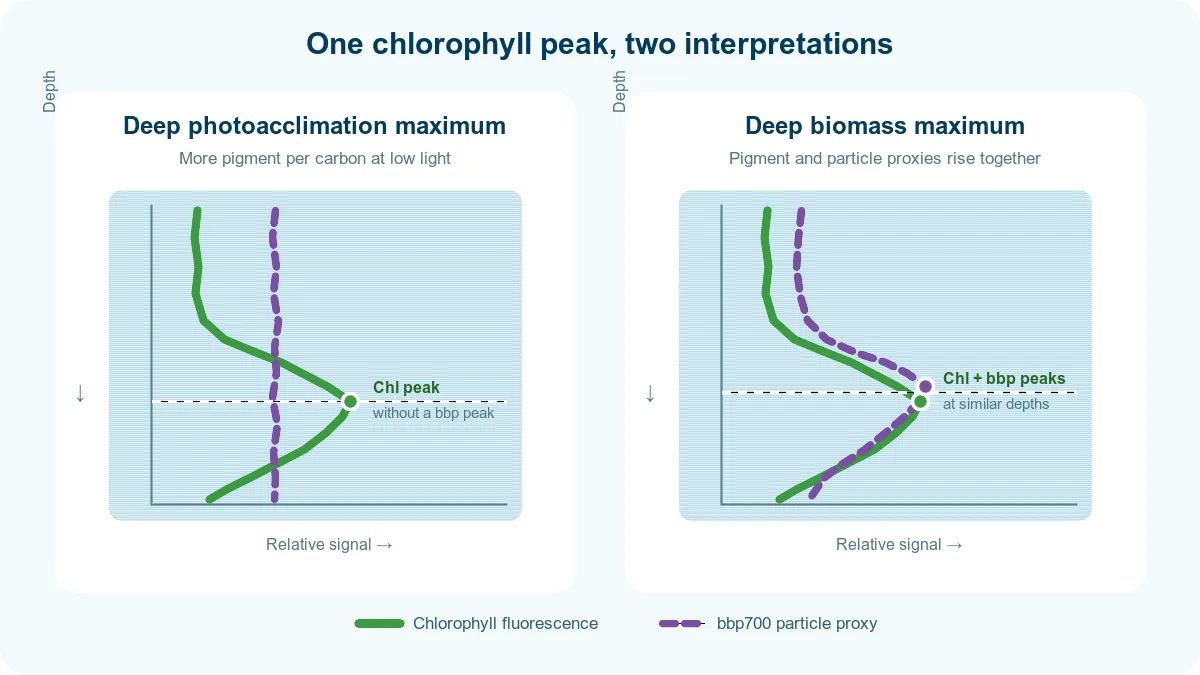
Learn how to read BGC Argo chlorophyll profiles, recognize a deep chlorophyll maximum, and distinguish pigment changes from biomass changes.
Biogeochemical Argo
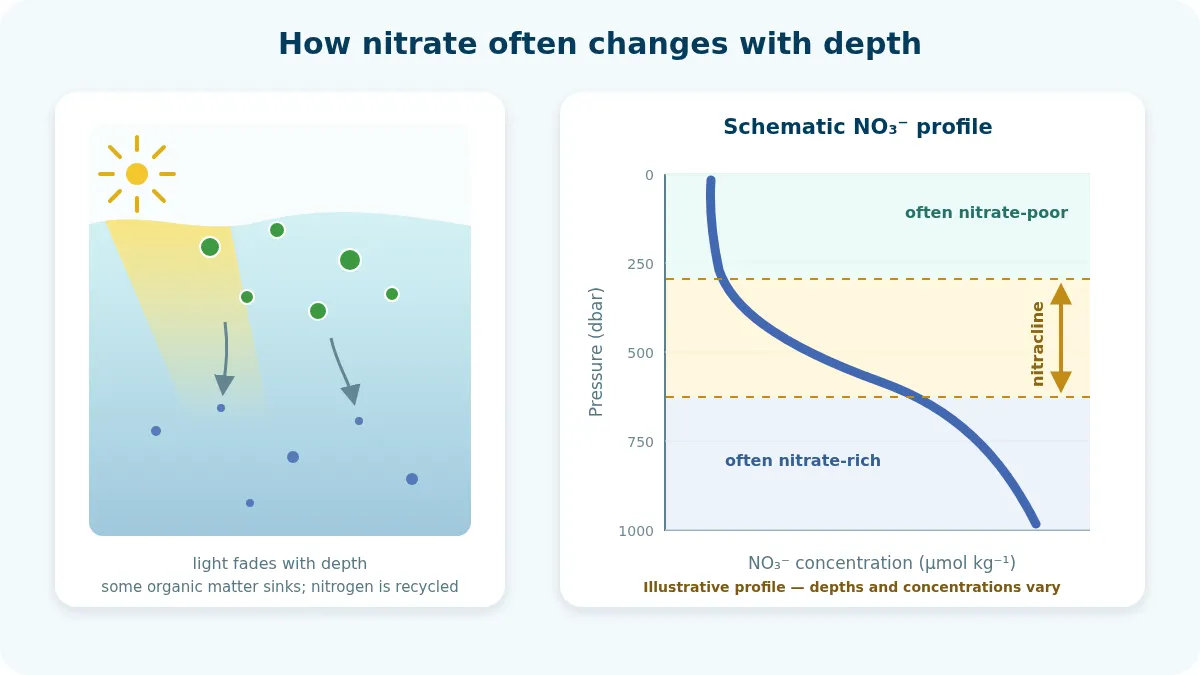
Learn why ocean nitrate often increases below the surface, how to identify a nitracline, and how to read BGC Argo nitrate profiles without overinterpreting them.

Biogeochemical Argo
Understand why sunlight has no single depth limit, what PAR measures, and how to read the 1% light depth and BGC Argo profiles without confusing missing data with darkness.
Biogeochemical Argo
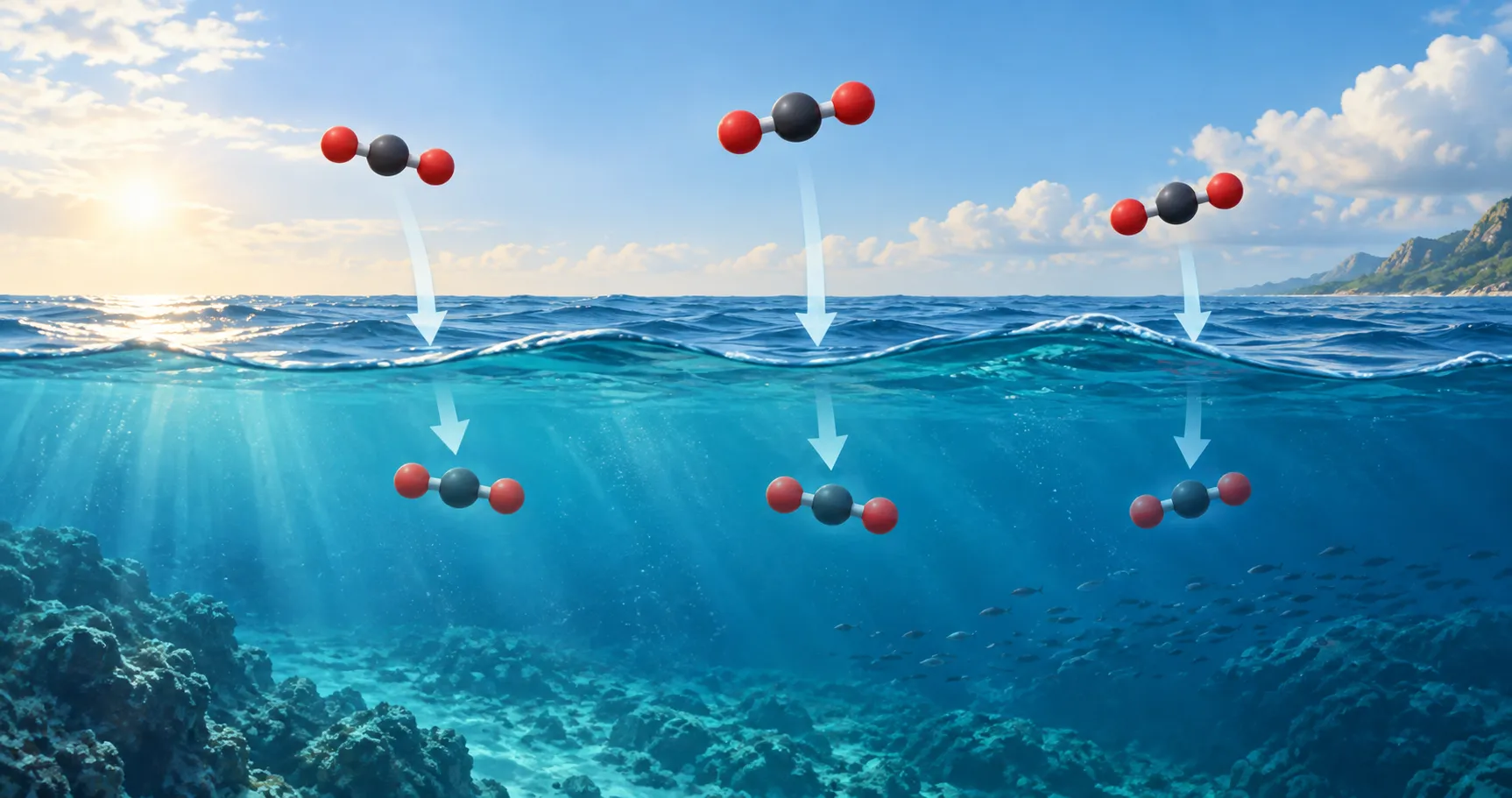
Understand why seawater pH falls, what BGC Argo pH profiles reveal, and how to distinguish depth differences and short-term variability from long-term ocean acidification.
Biogeochemical Argo
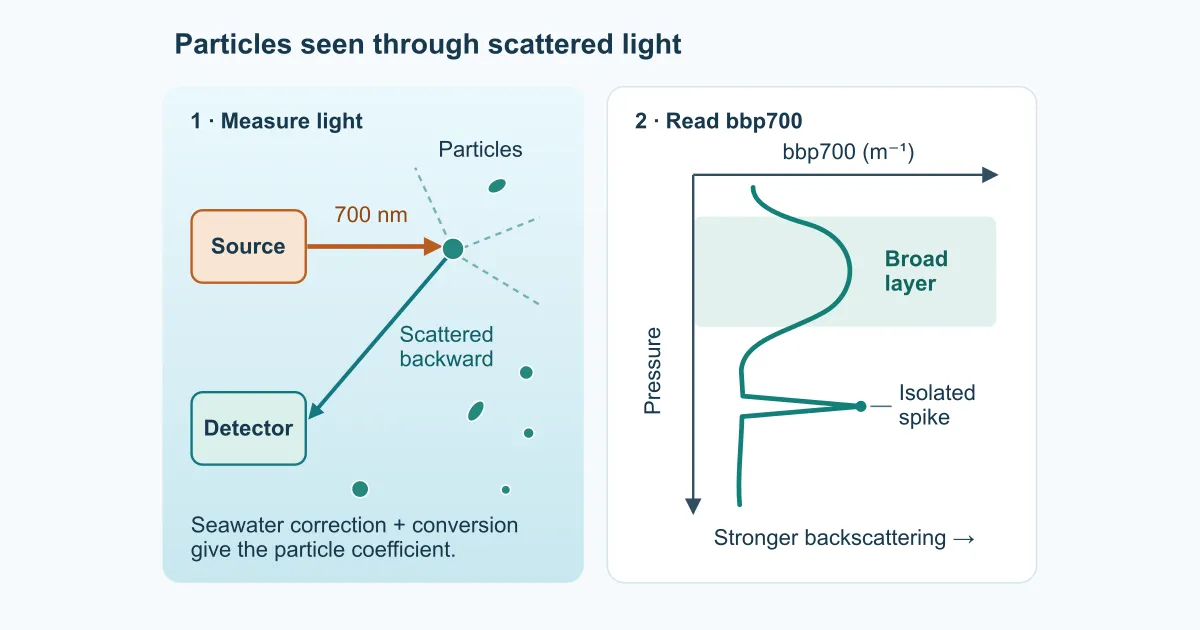
Understand what the particle backscattering coefficient bbp700 measures, how to read its vertical profile, and how it relates to chlorophyll and particulate carbon.